


Spades by Staple Games
4.51.45K Reviews
App Specs
- Version
- 2.07
- Updated On
- License
- Free
- Downloads
- 500,000+
- Developer
- Staple Games
- Categories
- Card
- Platform
- Android
Screenshots
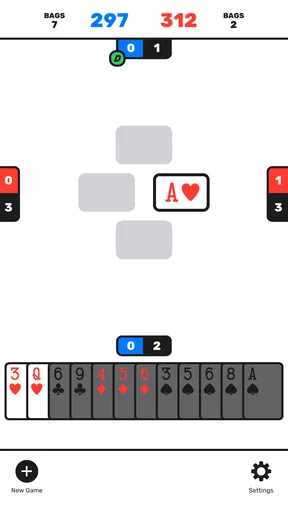
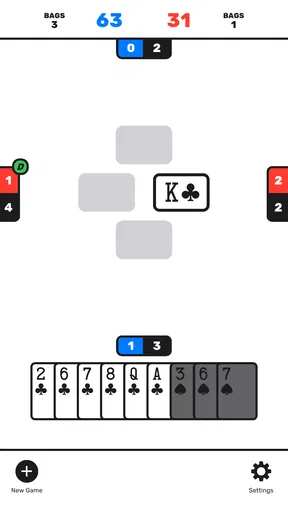
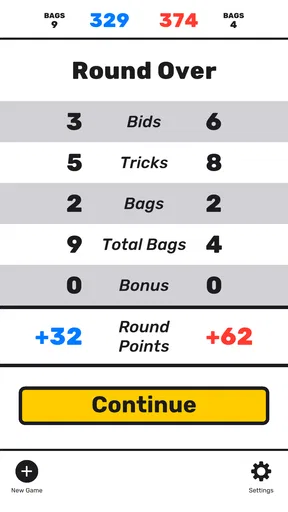
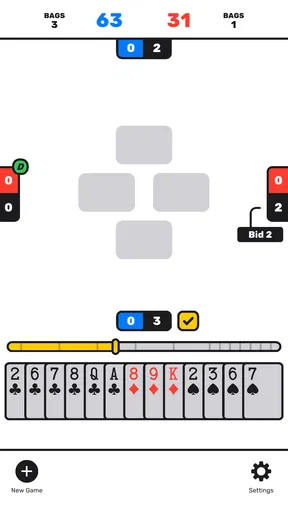
 Analysis by AppCompare
Spades is the kind of card game I open when I want something familiar, focused, and easy to start without turning the session into a major commitment. Staple Games keeps the presentation centered on the card table rather than surrounding the game with a complicated collection of systems. That simplicity is its strongest quality, although it also means the experience depends heavily on whether you already enjoy the decisions and rhythm of Spades.
As a free card game for Everyone, it is approachable for a wide range of players. I can imagine using it during a short break, while waiting for an appointment, or settling into a longer series of hands when I want something more thoughtful than a quick arcade distraction. The game has reached over 500 thousand installs and holds a 4.5 average from around 39 thousand ratings, which fits my impression that its straightforward format appeals to people looking for a recognizable card-table experience rather than a large, constantly changing game.
How the early goals shape the first hands
The first useful goal is simply learning to read the table. Spades is not difficult to understand at a basic level, but it rewards attention immediately. You need to consider the cards in your hand, estimate how many tricks you can realistically take, and decide whether your bid is ambitious or cautious. That creates a natural early objective without requiring a long tutorial structure: make a sensible prediction, then try to play toward it.
I like this because the opening hands do not need artificial rewards to feel meaningful. A successful bid gives me a clear sense that I read the situation correctly, while a failed bid shows exactly where my judgment went wrong. Sometimes I overestimate a strong-looking hand because I focus on high cards and ignore how many times another suit might force me to spend them. Other times I bid too carefully and leave potential points on the table. Those small lessons are the real early progression.
For a new player, I would recommend treating the first several rounds as practice in estimation rather than chasing perfect results. Pay attention to how many cards of each suit you hold, whether your spades can control later tricks, and whether your weaker suits might become useful when you need to discard. This is more helpful than trying to memorize a rigid formula, because the value of a hand changes with the cards already played.
The game works particularly well for someone who knows the basics of Spades but wants a convenient digital version. A complete beginner can still start, but the first few sessions may feel less rewarding if they expect every move to be obvious. The challenge is not in tapping a card; it is in making a prediction with incomplete information and living with the consequences.
Why the card table remains the main reward
Many mobile card games try to hold attention with collections, cosmetic unlocks, daily tasks, or a stream of unrelated bonuses. Here, the appeal is more concentrated. The satisfaction comes from improving decisions across hands: bidding with better discipline, remembering which suits have been exhausted, and recognizing when a trick is worth taking or avoiding.
Worth Reading Before You Choose

EA SPORTS FC Mobile 26 Is a Bigger Football Game, but It Takes Time

Flipboard Shows What News Apps Must Do Beyond the Feed

Switching to Android Auto Means Rethinking Your Driving Routine

Google Calendar Makes a Crowded Week Easier to Manage

Ludo King Makes the Most of the Minutes Between Plans

Baby Panda World Brings Quick Play to Modern Phones, but Its Game Library Feels Busy
That focus is useful for short sessions. I do not need to prepare a deck, find opponents in person, or spend time learning a large interface. I can begin with the familiar rules and let the individual hand provide the immediate objective. If you enjoy card games because of their decisions rather than their presentation, this is a good match.
There is also a practical benefit to the compact design. A hand can be treated as a self-contained problem, so a brief session still has a beginning, middle, and result. If I have only a few minutes, I can play a small amount and stop without feeling that I have abandoned a complicated campaign. When I have more time, the same structure supports a longer run of hands and gives me a chance to adjust after mistakes.
Progress signals, pacing, and the difficulty curve
Spades does not need a traditional character-level system to show progress. My clearest progress signal is the quality of my choices. Early on, I may bid based on the most attractive cards in my hand. With experience, I start considering the entire hand: possible voids, the timing of spades, the danger of taking unwanted tricks, and how the other side may respond to the opening lead.
That kind of progress is subtle, but it is more durable than a simple unlock meter. A new player can feel improvement even when the game has not added a new rule. I begin to recognize familiar patterns faster, recover more calmly from a bad opening, and understand that a low card can be valuable if it helps me lose a trick at the right moment.
The difficulty curve is therefore tied to judgment rather than a visible sequence of increasingly complex stages. The rules remain approachable, but strong play becomes harder as I try to make fewer avoidable errors. This is a good fit for players who like gradual mastery. It may be less satisfying for anyone expecting a campaign with clearly marked chapters, dramatic challenge gates, or a large set of unlockable content.
One useful way to manage the curve is to change only one habit at a time. I might spend a few hands concentrating on more accurate bidding, then shift attention to remembering which high cards have already appeared. Trying to track every detail immediately can make a simple game feel unnecessarily stressful. The best improvement comes from building a reliable routine: inspect the hand, make a realistic bid, watch the suits, and review the result before rushing into the next deal.
What makes a hand challenging
The most interesting tension comes from the gap between what I want to happen and what the hand allows. A hand may contain enough strength to tempt an aggressive bid, but not enough control to guarantee that the tricks arrive in a useful order. A hand with several spades can feel powerful, yet using them too early may give opponents opportunities later. Conversely, holding back can leave me unable to take a necessary trick when the round reaches its final turns.
This gives the pacing a pleasant rise and fall. The opening is about planning, the middle is about adapting, and the final tricks often reveal whether the original estimate was realistic. I enjoy that the result is not decided solely by the first card I play. A careful player can sometimes limit the damage from a poor hand, while an overconfident plan can unravel even with attractive cards.
There is a trade-off here. Because the core rules stay stable, the game can feel repetitive if I want constant novelty. The same basic questions return from hand to hand, and that is either the point or the limitation depending on my expectations. I would choose this over a more elaborate card title when I want a clean mental exercise, but I would look elsewhere if I wanted story scenes, deck construction, or a steady stream of new mechanics.
Retention without turning every session into a chore
The game’s ability to keep me playing comes from the “one more hand” effect. A close result invites another attempt, especially when I believe a better bid or a different lead could have changed the outcome. That motivation feels healthier than being pushed through a long list of obligations. I can play because I want to test my reading of the table, not because I need to maintain a complicated schedule.
At the same time, players who need visible long-term goals may find the retention structure light. The strongest reason to return is personal improvement and the unpredictability of the next hand, not a broad progression framework. That distinction matters. If you enjoy repeating a familiar ruleset while sharpening your decisions, the pacing can be very comfortable. If you need frequent rewards, new areas, or a large collection to build, the straightforward approach may lose its pull sooner.
I also think the free price makes experimentation easy. There is little commitment involved in trying a few hands to see whether the format suits you. The Everyone rating makes it a reasonable choice for a shared household device or for introducing a younger player to the basic idea of trick-taking, although a beginner may still need someone to explain why bidding and controlled losses matter.
For an everyday scenario, I would use it during a commute break or while waiting for a friend. I could play one hand, put the phone away, and return later without needing to remember a long quest or manage a collection. On a quiet evening, I might continue for longer and focus on whether my decisions are becoming more consistent. That flexibility is one of the game’s most practical strengths.
Small habits that improve the experience
My first tip is not to judge a hand only by its highest cards. Count the ways you might lose control of the round as well as the ways you might win tricks. A hand with a promising top card can still be awkward if it offers no safe way to shed low cards or if the likely leads force you to spend strength too soon.
My second tip is to treat the bid as a plan, not a prediction you forget after the opening trick. Once the hand begins, keep asking whether the plan still makes sense. If you have already taken the tricks you expected, avoid unnecessary risks. If an opponent’s play changes the shape of the hand, adapt rather than trying to force the original idea.
My third tip is to use the ending of each hand as a quick review. I ask myself whether the problem was the bid, the timing of my spades, or a failure to notice what had already been played. This turns losses into specific practice. “I played badly” is not useful; “I spent my control too early” gives me something concrete to change next time.
These habits also explain why the game can be more engaging than its short description suggests. The surface is simple, but the decisions become richer when I stop treating every trick as an isolated move. The best play is often about preparing for two or three turns ahead while still leaving room to react.
Who should choose it, and who should skip it
I would recommend this version to someone who wants a familiar Spades card game that starts quickly and does not demand a large time investment. It is especially suitable for players who enjoy probability, memory, and making plans with imperfect information. It can also work for experienced players who want a convenient way to practice their instincts away from a physical table.
I would be more cautious about recommending it to someone who dislikes repeated rounds with the same core objective. The game’s appeal is concentrated in the rules of Spades, so there is no reason to expect it to satisfy a player looking for a broad adventure, a deep deck-building system, or constant content changes. A multiplayer-focused player may also prefer an alternative built around playing directly with friends, depending on what kind of social experience they want.
Compared with playing with a physical deck, this app is more convenient and less dependent on finding other people, but it cannot replace the conversation and table atmosphere of a real group. Compared with a more feature-heavy digital card title, it is easier to understand and less cluttered, but it offers less variety outside the central game. That is the central trade-off: Staple Games appears to prioritize immediate play and recognizable rules over a large surrounding ecosystem.
The developer, Staple Games, has kept the identity of the product clear. The store summary presents it as a favorite card game, while the short description simply identifies Spades, and that restraint matches the experience better than an exaggerated promise would. I appreciate knowing what kind of session I am getting before I start: a focused trick-taking game rather than a broad mobile package.
My progression verdict
In my experience, the progression works because it is mostly internal. The early goal is to understand the hand and make a credible bid. The progress signal is recognizing patterns that once felt confusing. The difficulty rises as I try to manage timing, risk, and memory with fewer mistakes. The reason to return is the possibility of playing the next hand more intelligently, not the pressure of maintaining a long checklist.
That approach will not suit everyone, and I would not pretend it provides the same kind of retention as a game built around unlock trees or frequent rewards. Its pacing can become familiar, and players who need constant novelty may move on. But for a free, focused card title, that simplicity is also what makes it easy to recommend. I can pick it up for a short break, learn from a close loss, or settle into a longer sequence without fighting through unnecessary complexity.
The current version is 2.07, and the game supports devices using Android 7.0 or later. Those details make it accessible to many Android users with older phones, while the Everyone content rating keeps the presentation broadly suitable. With around 1.4 thousand written reviews alongside its strong average rating, it has also attracted enough player feedback to feel like an established choice rather than an obscure experiment.
My recommendation is simple: choose it if you want the decisions of Spades to carry the experience. I would skip it only if your priority is a large progression system, a highly social table, or constant mechanical variety. For everyone else, this is a clean way to turn a few spare minutes into a thoughtful card session, with enough tactical depth to reward patience without making the game feel like homework.
Pros
- Simple rules make it easy for beginners to start playing.
- Quick rounds fit well into short breaks or casual sessions.
- Clean card design keeps the gameplay easy to follow.
- Works well for players who enjoy classic trick-taking games.
- Progress feels accessible without requiring advanced strategy.
Cons
- Limited variety may make the experience repetitive over time.
- Computer opponents can feel predictable during some matches.
- Some features may be restricted unless you watch ads.
- The game offers little social interaction compared with multiplayer apps.
- Players wanting deep customization may find the options too basic.
FAQs for Spades by Staple Games
What is Spades by Staple Games?
Spades by Staple Games is a digital version of the classic trick-taking card game for mobile devices. It lets you play Spades against computer-controlled opponents, making it suitable for quick solo sessions. The app focuses on straightforward gameplay, familiar card rules, and an accessible interface rather than offering a large collection of unrelated game modes.
How do you play Spades by Staple Games?
The objective is to estimate how many tricks you can win before each hand begins and then try to meet that bid during play. Spades are always trump, meaning they can generally beat cards from other suits. You play one card per round while following the lead suit whenever possible. The app handles scoring, turns, and legal moves automatically, which makes the rules easier to learn.
Can I play Spades by Staple Games offline?
The game is designed primarily for convenient solo play, so it can generally be used without a continuous internet connection once installed. Offline availability may depend on the specific version, device, and whether an initial connection is required for advertising or app services. If offline access is important, it is best to test the game in airplane mode after installation.
Does Spades by Staple Games support multiplayer?
Spades by Staple Games is mainly presented as a single-player card game against computer opponents. It is therefore better suited to users who want a quick match without waiting for online players or inviting friends. Multiplayer features can vary between releases and updates, so check the current store description before downloading if real-time or local competition is essential.
Is Spades by Staple Games free to download?
The app is typically available as a free download, allowing users to start playing without purchasing the game upfront. Like many free mobile titles, it may include advertisements or optional in-app purchases, depending on the platform and current version. Review the store listing for the latest pricing, advertising details, and purchase options before installing it on your device.


